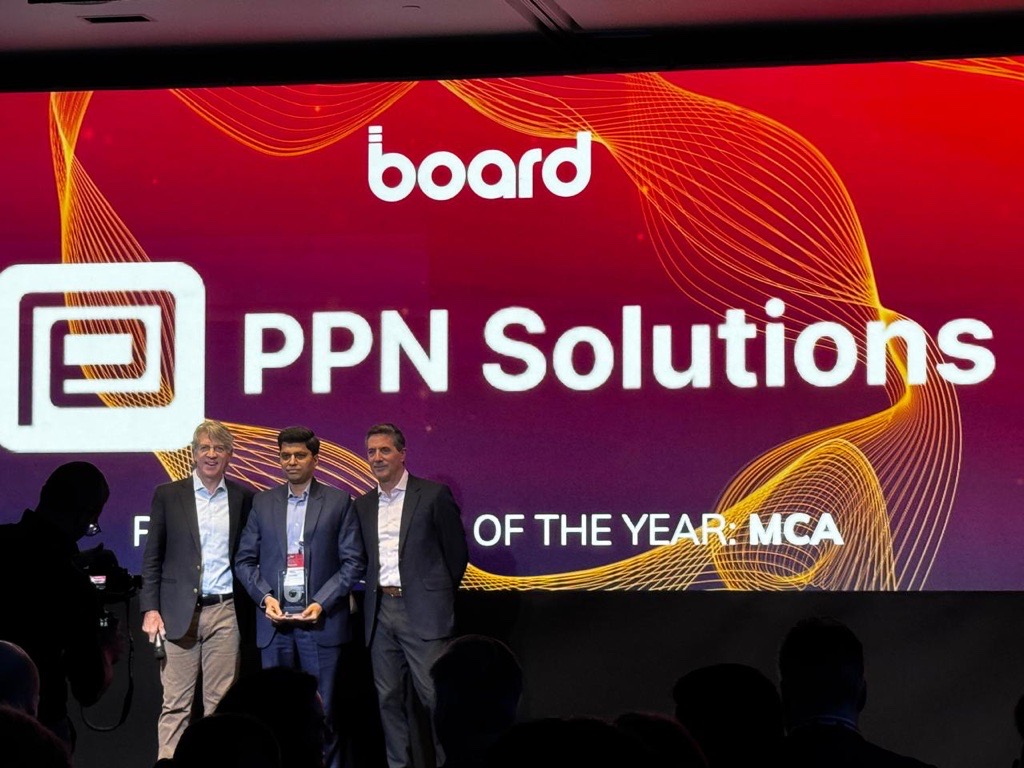
Awarded Best EPM Implementation Partner – MCA region at BOARD Global Partner Summit 2026
Didn’t find what you’re looking for? Let us know your needs, and we’ll tailor a solution just for you.



In an increasingly volatile, uncertain, and data-driven world, financial agility is no longer a luxury — it’s a competitive necessity. Yet many organizations still treat Financial Planning & Analysis (FP&A) as a back-office function focused solely on budgets and variance reports.
That approach is outdated — and dangerous.
Modern FP&A has evolved into a strategic business partner that enables proactive decision-making, scenario modeling, and real-time financial insights.
If your FP&A processes aren’t delivering these capabilities, your business could be missing opportunities, making decisions on stale data, or reacting too slowly to market changes.
With PPN’s FP&A solutions, you can streamline workflows, enable real-time data access, and build agile, forward-looking planning models.
So, how do you know if your finance function is falling behind?
Here are seven clear signs your company may be due — or overdue — for an FP&A transformation.
Relying on dozens (or hundreds) of Excel files for your planning and forecasting processes is a recipe for inefficiency. If your team spends more time collecting, cleaning, and reconciling data than analyzing it, you’re not using FP&A as a value-adding function.
Invest in a centralized, cloud-based FP&A platform that allows for collaboration, data integration, and real-time updates. This shift eliminates silos and lays the groundwork for more strategic financial planning.
Does your forecast feel more like a guess than a reliable business guide? If your forecasts are consistently missing the mark or delivered too late to be useful, your company is reacting to change instead of preparing for it.
Adopt driver-based forecasting and rolling forecasts that are updated frequently. Leverage predictive analytics and AI tools to improve accuracy over time.
If executives are relying on weekly or monthly reports to understand business performance, they’re flying blind in fast-changing conditions. Today’s leaders need data-driven insights at their fingertips, not after the fact.
Enable real-time dashboards, KPIs, and integrated data sources within your FP&A ecosystem. Empower decision-makers to act with confidence — in real time.
If department heads are building their own budgets in isolation or questioning finance’s data, you’ve got a credibility gap. A lack of transparency or collaboration between finance and operations leads to misalignment and tension.
Improve cross-functional collaboration by involving business stakeholders in the planning process. Use tools that enable transparency and shared ownership of financial outcomes.
If your annual budgeting process takes months and consumes valuable time, it’s a sign your FP&A function is outdated. Static planning doesn’t work in a dynamic market.
Implement rolling forecasts and quarterly planning cadences. This allows your organization to remain agile, responsive, and aligned with current business realities.
In a world full of uncertainty — economic shifts, supply chain disruptions, customer behavior changes — the ability to quickly model different outcomes is critical.
Modern FP&A tools like BOARD enable drag-and-drop scenario modeling with real-time data integration. You should be able to answer “what if?” in minutes, not days.
Is your FP&A team constantly working late nights during planning cycles? Are they stuck producing reports rather than providing insights? These are signs of a broken system and underutilized talent.
Automate repetitive tasks, reduce manual effort, and provide professional development that upskills your team for strategic analysis, business partnering, and storytelling.
The future of FP&A is not just about controlling budgets — it’s about guiding business decisions through insightful, forward-looking analysis. If you recognized even a few of these seven warning signs, your company may be overdue for an FP&A transformation.
Start with the basics: streamline your processes, integrate real-time data, and equip your team with modern tools and training. The result? A high-impact FP&A function that helps drive smarter, faster decisions and better business outcomes.