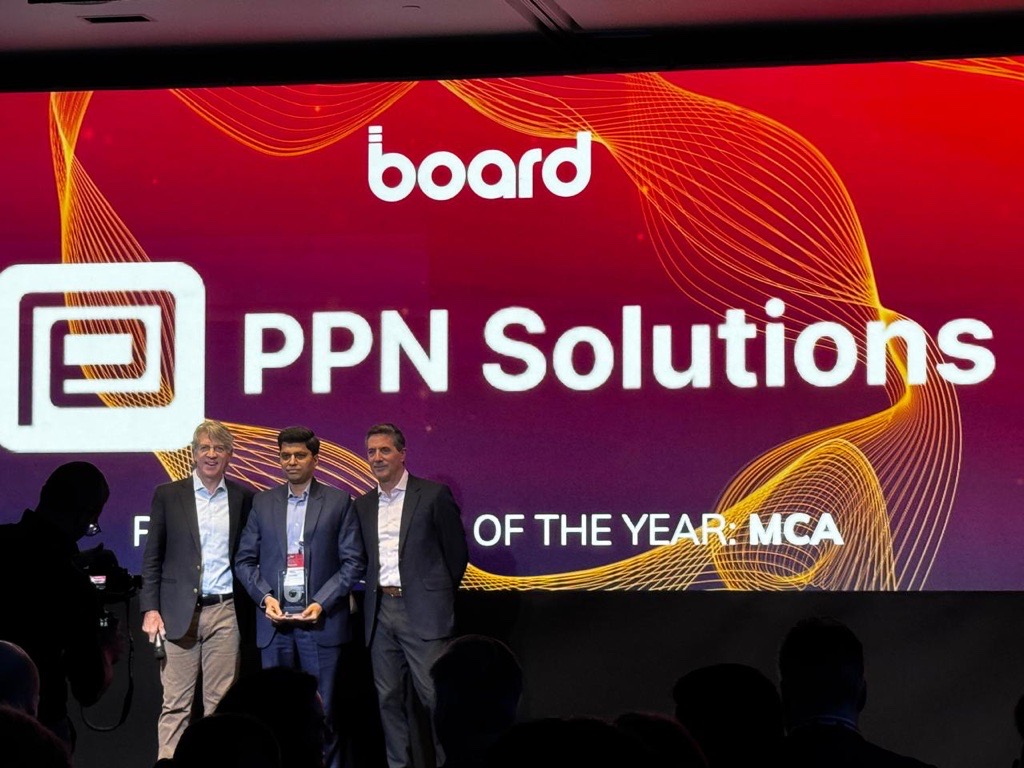
Awarded Best EPM Implementation Partner – MCA region at BOARD Global Partner Summit 2026
Didn’t find what you’re looking for? Let us know your needs, and we’ll tailor a solution just for you.



As global markets evolve rapidly, supply chain leaders are under constant pressure to improve resilience, reduce costs, and enhance visibility across the entire network. The year 2026 is poised to bring transformative advancements driven by technology, sustainability priorities, and shifting customer expectations.
Here’s a look at the top supply chain management trends that businesses need to watch — and start planning for — in 2026.
AI is no longer a futuristic concept — it’s becoming central to supply chain operations.
By leveraging AI, companies can anticipate disruptions, optimize inventory levels, and improve service delivery with greater precision.
Automation continues to reshape logistics and warehousing.
These technologies help reduce labour costs, speed up throughput, and improve accuracy.
Visibility is critical for transparency, traceability, and trust.
Blockchain is becoming an essential tool for organizations with complex, multi-tier supply chains.
Environmental responsibility is now a business imperative.
Customers are increasingly demanding sustainability — and companies that lead here will gain competitive advantage.
Digital twin technology creates virtual replicas of supply chain ecosystems.
Digital twins help companies make smarter decisions based on simulated outcomes.
Consumers expect fast, personalized delivery — and businesses are adapting.
This trend supports faster delivery while reducing transportation costs.
Cloud-based supply chain platforms are replacing legacy systems.
Cloud adoption accelerates decision-making and enables seamless collaboration.
Equipment downtime can halt entire supply operations.
Predictive maintenance ensures higher operational uptime and efficiency.
Supply chains must be prepared for unpredictable disruptions.
Companies that invest in resilience are better equipped to handle shocks without sacrificing performance.
Technology advancements are reshaping workforce needs.
Investing in people is just as important as investing in technology.
Supply chain management in 2026 will be defined by intelligence, agility, and sustainability. Organizations that embrace advanced technologies, foster collaboration, and build adaptable operations will lead the competitive landscape.
Preparing for these trends today means stronger performance, greater customer satisfaction, and future-ready supply chains for tomorrow.