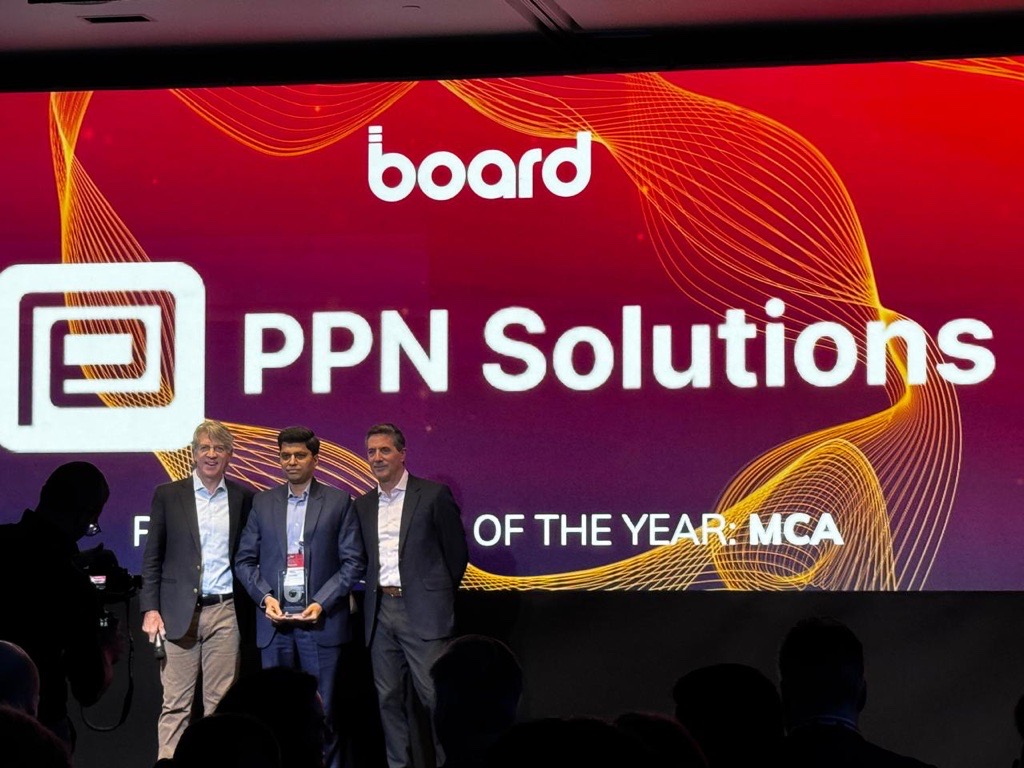
Awarded Best EPM Implementation Partner – MCA region at BOARD Global Partner Summit 2026
Didn’t find what you’re looking for? Let us know your needs, and we’ll tailor a solution just for you.



The CFO’s role is no longer confined to closing books and delivering quarterly reports. Finance leaders today are expected to drive strategy, forecast with precision, and provide insights that shape the business’s direction. But with increasing data complexity, tighter compliance requirements, and pressure to move faster, traditional financial reporting methods are falling short.
That’s where financial reporting automation steps in.
More than just a time-saver, automation is fundamentally reshaping the way CFOs operate streamlining workflows, minimizing errors, and unlocking real-time visibility into financial health. It’s not just changing how reports are generated; it’s redefining the entire CFO workflow.
Traditional financial reporting is time-consuming and error-prone. CFOs and their teams often spend countless hours manually entering data, consolidating spreadsheets from multiple departments, and double-checking numbers for accuracy. Even a small mistake can snowball into major compliance or financial issues.
Financial automation tools drastically reduce the manual workload. These tools can:
By minimizing human intervention, automation reduces the risk of errors and ensures cleaner, more reliable data. This frees up the finance team to focus on analysis rather than data entry.
In the past, financial reporting was a backward-looking activity. CFOs would receive reports days or weeks after the end of the reporting period—limiting their ability to respond quickly to financial trends or operational issues.
With automated reporting, data is updated in real time. CFOs can access:
This shift allows CFOs to become more proactive, making faster decisions with up-to-date insights instead of relying on outdated reports.
“Access to real-time data transforms the CFO from a financial historian into a strategic navigator.”
As financial regulations become more complex, compliance is a growing concern for CFOs. Manual reporting systems often struggle to keep up with the evolving requirements of GAAP, IFRS, SOX, and other frameworks.
Automated reporting systems:
This not only reduces the burden of preparing for audits but also minimizes the risk of non-compliance, penalties, or reputational damage.
A key challenge for CFOs is coordinating data from multiple departments—HR, operations, sales, marketing, and more. Often, these teams operate in silos, making it difficult to consolidate information for company-wide financial reporting.
Financial automation platforms often feature:
By breaking down silos, these tools enable seamless collaboration, faster data collection, and greater transparency. CFOs can gain a holistic view of organizational performance and align finance with broader business goals.
As CFOs spend less time on operational tasks, they gain more bandwidth to contribute strategically. Automation provides powerful analytics, scenario planning, and forecasting tools that help CFOs:
Rather than reacting to what’s already happened, CFOs can anticipate trends, mitigate risks, and identify growth opportunities.
As organizations grow, their financial processes become more complex. Manual systems simply don’t scale. Automation makes it easier to adapt to:
Moreover, financial automation lays the groundwork for adopting emerging technologies like:
Forward-thinking CFOs who embrace automation today are better positioned to lead innovation tomorrow.
Financial reporting automation has become essential for modern CFOs. By integrating FP&A services and finance transformation services, businesses can streamline workflows, enhance data accuracy, and enable real-time decision-making. This shift empowers finance teams to move from reactive reporting to a truly strategic, insight-driven function.
For CFOs, this shift means:
If you’re a CFO looking to future-proof your finance team, investing in financial reporting automation is one of the smartest moves you can make.